Toll painting glassware is an inexpensive way to create festive serving glasses for autumn parties. After the party, the paint easily washes off with a little soap and hot water.
You will need:
Toll paint (acrylic paint)
Paintbrushes
Scratch paper
Glassware to be painted
When choosing your toll paint, be sure it is not the kind made specifically for glass, as this type of paint is permanent and will not wash off the glassware after the party. Avoid anything that says “Patio Paint” as it is usually permanent. The best paint to use for this project is just the generic acrylic paint available in craft stores.
To make autumn leaves, load a flat-tipped paintbrush with red on one half and orange on the other (you can also substitute yellow for one of the colors). Run a short stroke down the scratch paper, squiggling the brush from side to side to blend the colors a bit.
With the red half of the brush facing out, paint several small maple leaf shapes on the glassware. Use a quick stroke through the center of the leaves to fill in any open spaces. Pumpkins, jack-o-lanterns, spiders and webs make equally appropriate glass decorations for autumn parties.
Once the glassware is painted, leave it to dry for several hours before using. After use, simply soak them in a sink full of hot, soapy water, and the paint will easily rub off with a dishtowel.
This project need not be saved only for autumn. It can easily be adjusted for any time of the year. Snowflakes, snowmen, and evergreen trees work well for Christmas. Shamrocks for St. Patrick’s Day. Hearts for Valentines Day. Flowers for Midsummer’s Eve. Almost any time of year presents suitable symbols.
This blog is no longer in use, please visit the updated website at: www.TheWoodlandElf.com
Saturday, October 29, 2011
Saturday, October 22, 2011
Simple Pleasures Project, Day 130
Hiding in the woods with my brother so we can jump out and scare people coming to the Halloween party.
Simple Pleasures Project
Sunday, October 16, 2011
Fracking: Short-Term Benefits, Long-Term Catastrophe
With the current possibility of New York State being opened to fracking, the debate about whether the benefits outweigh the risks is a hot topic. There are extremes on both sides, with some people claiming that there are no benefits to fracking, and others claiming there are no adverse effects from fracking. The truth is, fracking has both benefits and detriments. The problem is that, while the benefits are certainly instant gratification, the long-term impacts are often catastrophic.
First and foremost, the greatest benefit of fracking is that it will immediately provide jobs. What is often overlooked, however, is how many jobs it will undoubtedly destroy in the long run. Fracking consumes huge amounts of drinking water and uses toxic chemicals. When spills occur (which is inevitable in any man-made operation), those toxic chemicals are released into the environment, right into the path of drinking water sources. Aside from the hazardous chemicals used in the process, fracking also releases naturally occurring deposits of dangerous substances, including radioactive materials, found in high levels in the Marcellus Shale where the NY fracking would take place. There will be many sites flunking their radon tests if fracking is allowed in New York.
Such chemicals have ended up in the water sources at hundreds of places in Pennsylvania, New Mexico and Colorado, which has suffered over three-hundred spills of chemically contaminated fracking waste water. In Pavilion, Wyoming, the EPA found high levels of cancer-causing substances that are often used in fracking, in the water supply of over forty homes. Residents in this city have also contracted a number of neurological ailments from exposure to these chemicals. The residents of this city had fresh clean water until the fracking began, at which point their water began to turn black as well as smelling and tasting like gas.
Perhaps the most alarming fact is that fracking is exempt from the Clean Water Act of 2005. Fracking companies are exempt from disclosing what toxic chemicals they use in the process. In short, they can pump what whatever toxins they want into the drinking water, reap the profits from the gas produced, and be long gone while the residents are left to deal with the aftereffects.
Due to these ecological impacts, people who will be adversely affected include, but are not limited to, farmers whose livelihood depends greatly upon water availability. Waiters, cooks, and others in the restaurant industry when tourism rates fall due to polluted water sources. Hotels workers for the same reason. People involved in real estate will be affected, as banks know the impacts of fracking and are reluctant to loan to those in the vicinity of fracking wells. Not to mention the fact that property values plummet in the wake of fracking fallout due to contamination.
Gas is not a gift that keeps on giving. With our current rate of consumption, it is something that will inevitably run out. Therefore it is ludicrous to destroy so many lives for a few extra years worth of what is ultimately a finite resource. The ones who profit are the ones who will be least affected by the aftermath of fracking; the gas companies. The rest of us pay for the gas companies' greed.
People often tout fracking as a way of gaining energy independence. This is a misleading claim, however. Fracking produces natural gas, a liquid that is used largely for home heating. America’s larger energy consumption, however, is petroleum. This oil is used in everything from cosmetics to plastics to medications and of course is the gasoline that fuels American automobiles. In fact America consumes more oil than any other country in the world. The oil for this country’s guzzling appetite is fueled largely by other countries such as the Middle East which hold the largest deposits of oil. No amount of fracking will change that, and therefore will never lead to energy independence.
The natural gas produced by fracking is claimed by supporters to be a “cleaner” energy source, and while it is cleaner than oil (most of which doesn’t come from this country anyway), it actually leaks more emissions than coal. Robert Howarth, a professor at Cornell University conducted a study on the emissions produced by natural gas and found that "Compared to coal, the footprint of shale gas is at least 20 percent greater and perhaps more than twice as great on the 20-year horizon and is comparable when compared over 100 years."
Additionally, hydrofracking has been found to cause earthquakes, just one more way fracking will harm people and their properties. Cuadrilla Resources, a British hydrofracking company actually admitted that their fracking well did cause multiple, minor earthquakes. Unlike seismic events on the west coast, where the damage is generally more localized, quakes on the east coast are often felt throughout an area ten times larger than the west coast, due to the fact that the east coast ground is colder and more intact. East coast quakes are often felt throughout several states, making the damage area more widespread. Also the locations of many fault lines on the east coast are unknown, making it all the more difficult for fracking companies to avoid. Just one more reason to keep fracking out of New York.
In the end, I think there’s one phrase that sums up the situation. Don’t frack with my water supply! Don’t frack with New York!
First and foremost, the greatest benefit of fracking is that it will immediately provide jobs. What is often overlooked, however, is how many jobs it will undoubtedly destroy in the long run. Fracking consumes huge amounts of drinking water and uses toxic chemicals. When spills occur (which is inevitable in any man-made operation), those toxic chemicals are released into the environment, right into the path of drinking water sources. Aside from the hazardous chemicals used in the process, fracking also releases naturally occurring deposits of dangerous substances, including radioactive materials, found in high levels in the Marcellus Shale where the NY fracking would take place. There will be many sites flunking their radon tests if fracking is allowed in New York.
Such chemicals have ended up in the water sources at hundreds of places in Pennsylvania, New Mexico and Colorado, which has suffered over three-hundred spills of chemically contaminated fracking waste water. In Pavilion, Wyoming, the EPA found high levels of cancer-causing substances that are often used in fracking, in the water supply of over forty homes. Residents in this city have also contracted a number of neurological ailments from exposure to these chemicals. The residents of this city had fresh clean water until the fracking began, at which point their water began to turn black as well as smelling and tasting like gas.
Perhaps the most alarming fact is that fracking is exempt from the Clean Water Act of 2005. Fracking companies are exempt from disclosing what toxic chemicals they use in the process. In short, they can pump what whatever toxins they want into the drinking water, reap the profits from the gas produced, and be long gone while the residents are left to deal with the aftereffects.
Due to these ecological impacts, people who will be adversely affected include, but are not limited to, farmers whose livelihood depends greatly upon water availability. Waiters, cooks, and others in the restaurant industry when tourism rates fall due to polluted water sources. Hotels workers for the same reason. People involved in real estate will be affected, as banks know the impacts of fracking and are reluctant to loan to those in the vicinity of fracking wells. Not to mention the fact that property values plummet in the wake of fracking fallout due to contamination.
Gas is not a gift that keeps on giving. With our current rate of consumption, it is something that will inevitably run out. Therefore it is ludicrous to destroy so many lives for a few extra years worth of what is ultimately a finite resource. The ones who profit are the ones who will be least affected by the aftermath of fracking; the gas companies. The rest of us pay for the gas companies' greed.
People often tout fracking as a way of gaining energy independence. This is a misleading claim, however. Fracking produces natural gas, a liquid that is used largely for home heating. America’s larger energy consumption, however, is petroleum. This oil is used in everything from cosmetics to plastics to medications and of course is the gasoline that fuels American automobiles. In fact America consumes more oil than any other country in the world. The oil for this country’s guzzling appetite is fueled largely by other countries such as the Middle East which hold the largest deposits of oil. No amount of fracking will change that, and therefore will never lead to energy independence.
The natural gas produced by fracking is claimed by supporters to be a “cleaner” energy source, and while it is cleaner than oil (most of which doesn’t come from this country anyway), it actually leaks more emissions than coal. Robert Howarth, a professor at Cornell University conducted a study on the emissions produced by natural gas and found that "Compared to coal, the footprint of shale gas is at least 20 percent greater and perhaps more than twice as great on the 20-year horizon and is comparable when compared over 100 years."
Additionally, hydrofracking has been found to cause earthquakes, just one more way fracking will harm people and their properties. Cuadrilla Resources, a British hydrofracking company actually admitted that their fracking well did cause multiple, minor earthquakes. Unlike seismic events on the west coast, where the damage is generally more localized, quakes on the east coast are often felt throughout an area ten times larger than the west coast, due to the fact that the east coast ground is colder and more intact. East coast quakes are often felt throughout several states, making the damage area more widespread. Also the locations of many fault lines on the east coast are unknown, making it all the more difficult for fracking companies to avoid. Just one more reason to keep fracking out of New York.
In the end, I think there’s one phrase that sums up the situation. Don’t frack with my water supply! Don’t frack with New York!
Sources:
The DEC
The EPA
National Geographic Magazine
Cornell University
60 minutes
Naturalgas.org
The American Petroleum Institute
The US Energy Information Administration
National Geographic Magazine
Cornell University
60 minutes
Naturalgas.org
The American Petroleum Institute
The US Energy Information Administration
The Daily Messenger Newspaper
Pennsylvania Newspapers
Monday, October 10, 2011
Bittersweet and Broomcorn Wreath
I've made a lot of broomcorn wreaths over the years, usually using a metal coathanger or the premade 12 and 18 inch metal hoops. This week, however, I had a request for a larger wreath, which I knew would be the perfect time to experiment with adding bittersweet to the broomcorn.
To begin, you will need a 24 inch grapevine wreath to use as the base. Cover it with broomcorn, using 22 gauge wire to secure the broomcorn to the grapevine base. Normally I go around the edges with brown thread (which is pretty much invisible against broomcorn) to keep the broomcorn tight, but since this wreath was so big, I thought it looked better with the edges loose, so I left them alone.
Tie a large, two loop bow from some autumn wire-edged ribbon. I found that plaid looked very nice. Secure it to the wreath with wreath wire.
Make four bunches of bittersweet stalks, each piece being about 4-6 inches in length. Fasten them to the wreath with wire putting two bunches at the top near the bow, and two bunches toward the bottom, but leaving several inches of space in the middle between them.
Make three bunch of dried roses (yellow or red work best as they're autumn colors). Use wreath wire to fasten the rose bunches on the wreath, in between the bittersweet bunches.
Hang this wreath on an indoor wall or outside under an eave.
To begin, you will need a 24 inch grapevine wreath to use as the base. Cover it with broomcorn, using 22 gauge wire to secure the broomcorn to the grapevine base. Normally I go around the edges with brown thread (which is pretty much invisible against broomcorn) to keep the broomcorn tight, but since this wreath was so big, I thought it looked better with the edges loose, so I left them alone.
Tie a large, two loop bow from some autumn wire-edged ribbon. I found that plaid looked very nice. Secure it to the wreath with wreath wire.
Make four bunches of bittersweet stalks, each piece being about 4-6 inches in length. Fasten them to the wreath with wire putting two bunches at the top near the bow, and two bunches toward the bottom, but leaving several inches of space in the middle between them.
Make three bunch of dried roses (yellow or red work best as they're autumn colors). Use wreath wire to fasten the rose bunches on the wreath, in between the bittersweet bunches.
Hang this wreath on an indoor wall or outside under an eave.
Tuesday, October 4, 2011
Halloween Spider Soaps
My aunt had a cute idea of putting bugs into soap bars for Halloween, so today I went ahead and tried it. It's a very simple project, and can be done using transparent melt and pour glycerin. You'll also need some plastic spiders which can be found pretty much anywhere this time of the year. Black is traditional, but other colors look great too.
Start by pouring a layer of glycerin into a brownie pan. Quickly set the spiders in the glycerin layer, making sure their legs poke down into the glycerin. When the first layer of glycerin has hardened, pour a second layer over it, covering the spiders. You can also allow a bit of the spider to stick out the top for texture.
Cut the soap into bars allowing one spider for each bar. Put the bars in a soap dish and warn arachnophobics to be ware!
Start by pouring a layer of glycerin into a brownie pan. Quickly set the spiders in the glycerin layer, making sure their legs poke down into the glycerin. When the first layer of glycerin has hardened, pour a second layer over it, covering the spiders. You can also allow a bit of the spider to stick out the top for texture.
Cut the soap into bars allowing one spider for each bar. Put the bars in a soap dish and warn arachnophobics to be ware!
| No spiders were harmed in the making of these soaps. |
Wednesday, September 28, 2011
100% Recycled Paper
I've been using cardstock that was 30% post consumer waste for several years now, but I've always been searching to better that percentage. Well, I've finally what I've been questing for, cardstock made of 100% recycled paper, 100% post consumer waste. Even the factory it's made in is power with sustainable, eco-friendly windpower. So I am thrilled to announce that from this day forth, my greeting cards (and envelopes of course) will be made with 100% recycled paper.
Thursday, September 22, 2011
Simple Pleasures Project, Day 100
Well, I've hit day 100 of the Simple Pleasures Project and I'm loving it.
Today's simple pleasure was making cards, something I really love and so fortunately get to do quite a lot of thanks to the farm market.
Thursday, September 15, 2011
My Own Piece of Land
The entrance to my little paradise
|
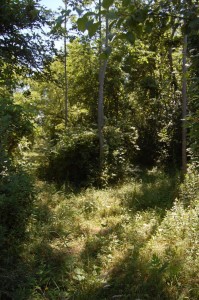
The lot is about 5 acres and has a sun-flecked wooded entrance (a must for a Woodland Elf), with the remainder being mostly open meadow. It’s even on the same road I’ve always lived on, just the other side of “Poppy and Gramma’s” farm. I’m stoked!
The plan is to live totally off the grid, producing my own food and electric and maintaining as close to a zero-waste policy as is humanly possible. There are already a few wild apples trees, (prime for autumn cider), some wild strawberries (which are still better than any domesticated varieties one can find), a slew of blackberry bushes, and even a few of my favorite nut trees. (At the moment there’s also an ever-flourishing crop of poison ivy, but I don’t plan to carry that into the future!).
Wednesday, September 14, 2011
Mirror Dangler
Ok, this project is sort of an embracing-your-inner-geek kind of thing, and is probably somewhere around a kindergarten level of skill, but I didn't have a lot of time so it was quick and fun.
Most people hang dreamcatchers or dice from the mirrors in their cars, but I wanted to try something a bit different. My car is named Serenity after Malcolm Reynold's spaceship Firefly, and the repeating line in the Firefly theme song is "You can't take the sky from me."
I enlisted the help of my sister who has a friend that spent a lot of time in China and knows how to write in Chinese (Chinese being one of the two languages used in Firefly). I asked her if she could translate you can't take the sky from me into Chinese characters. She couldn't find that exact phrase, but she gave me the characters for "You can't take my sky" which is I figured was close enough. While I'm using a Firefly quote, this project could be altered to use any quote in any language.
To begin, take a piece of cardstock big enough to accommodate your quote. Draw out the words in pencil (if you plan to have a quote on the backside as well, write it now. I wrote my car's name, Serenity, on the backside).
Next, trace the words (a few letters at a time) in glue and sprinkle glitter over them. Do the same to the backside if you wrote on it. Use the same color or a different color glitter to make outlines or underlines to spruce up the quotes.
When the glue has completely dried, bend the strip of cardstock into a circle and secure the ends with glue (if it won't stay shut, use a clothespin to hold it). Make sure the one you want on the outside is actually on the outside when you bend it.
Finally, punch a hole in each side of the circle, insert a sparkly string, and hang it from the mirror of your car. Nothing special, but a nice way to add a little personalization.
Most people hang dreamcatchers or dice from the mirrors in their cars, but I wanted to try something a bit different. My car is named Serenity after Malcolm Reynold's spaceship Firefly, and the repeating line in the Firefly theme song is "You can't take the sky from me."
I enlisted the help of my sister who has a friend that spent a lot of time in China and knows how to write in Chinese (Chinese being one of the two languages used in Firefly). I asked her if she could translate you can't take the sky from me into Chinese characters. She couldn't find that exact phrase, but she gave me the characters for "You can't take my sky" which is I figured was close enough. While I'm using a Firefly quote, this project could be altered to use any quote in any language.
To begin, take a piece of cardstock big enough to accommodate your quote. Draw out the words in pencil (if you plan to have a quote on the backside as well, write it now. I wrote my car's name, Serenity, on the backside).
Next, trace the words (a few letters at a time) in glue and sprinkle glitter over them. Do the same to the backside if you wrote on it. Use the same color or a different color glitter to make outlines or underlines to spruce up the quotes.
When the glue has completely dried, bend the strip of cardstock into a circle and secure the ends with glue (if it won't stay shut, use a clothespin to hold it). Make sure the one you want on the outside is actually on the outside when you bend it.
Finally, punch a hole in each side of the circle, insert a sparkly string, and hang it from the mirror of your car. Nothing special, but a nice way to add a little personalization.
Subscribe to:
Posts (Atom)